Is your organization ready for master data excellence?
Master data excellence does not require tooling, but ownership, focus, and a phased approach to achieve First Time Right and real process value.

Master data excellence does not require tooling, but ownership, focus, and a phased approach to achieve First Time Right and real process value.

The European Union has formally added the Iranian Revolutionary Guard Corps (IRGC) to the European terrorist list. This decision follows the bloody suppression of protests in Iran, which according to various sources left thousands dead. This step is mainly symbolic in nature, but the consequences are real. There is an entry ban, assets are frozen, and it is prohibited to do business with entities affiliated with the IRG.

A low DSO does not automatically mean that your cash flow is under control. Averages hide structural problems such as disputes, poor master data, late invoicing, and risky payment agreements. In this article, you can read about the 12 silent and active DSO killers that undermine your working capital and how to tackle them. By focusing on root causes, lead times, and risk throughout the entire order-to-cash chain, you can structurally reduce your DSO without having to make more calls.

The EU is taking a major step forward in the fight against money laundering with the arrival of AMLA and a completely revamped regulatory package. This blog explains what this means for reporting institutions, where the biggest risks lie, and what preparations are essential right now. In just a few minutes, you will understand the impact, the opportunities, and the actions you cannot afford to delay.

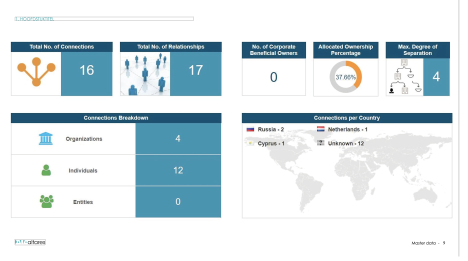
Your supplier database is probably less reliable than you think. Hidden corporate structures, duplicate suppliers, and fragmented spending mean you are missing opportunities and running risks. In this blog, you can read how corporate linkage helps you finally see the whole picture and achieve better deals, better insights, and a mature supply chain.

AI offers enormous opportunities, but without reliable data and clear processes, it remains nothing more than a promising prospect. Many organizations invest in AI without the proper preparation. In this blog, you can read why AI Readiness is the key to moving from experimentation to real impact and how a robust database is where success begins.

Many organizations manage Marketing, Sales, and Finance separately, while customers experience them as a whole. These internal silos cause friction, delays, and missed opportunities. By restructuring the organization from the customer's perspective—i.e., aligning processes with the customer experience—you can improve conversion, customer experience, risk management, and customer value. Successful organizations don't look at departments, but at the customer journey as a whole.

The Affiliates Rule of the US BIS puts the world of export control on high alert. Although its introduction has been postponed by a year, the message remains clear: the US wants more insight into ownership and control within international corporate structures. What does this mean for companies that do business worldwide, and how can you prepare for it now?

Compliance is changing rapidly. In 2025, the focus is shifting from retrospective compliance to proactive risk management. Data, technology, and AI play a key role in this. This blog shows where compliance professionals are setting their priorities and what this means for organizations.

Credit management is changing rapidly: from collecting invoices to strategic customer management. Marverick van de Beeten (MaxCredible) explains how data, AI, and human empathy work together to ensure predictable cash flow and stronger customer relationships. Discover how technology is transforming the profession.

Agentic AI is changing the way we work. In the Altares webinar, experts shared how AI agents not only perform tasks but take over entire processes. What does this mean for companies, data, and employees? Read the key insights here and discover how to take the first step toward an AI-ready organization.

Successful organizations no longer make decisions based on gut feeling, but on data. With real-time insights and automated processes, trade credit risk management becomes faster, smarter, and more consistent. Discover how integrated decision-making in CRM and ERP systems reduces risks and increases growth opportunities.